Thrive Online
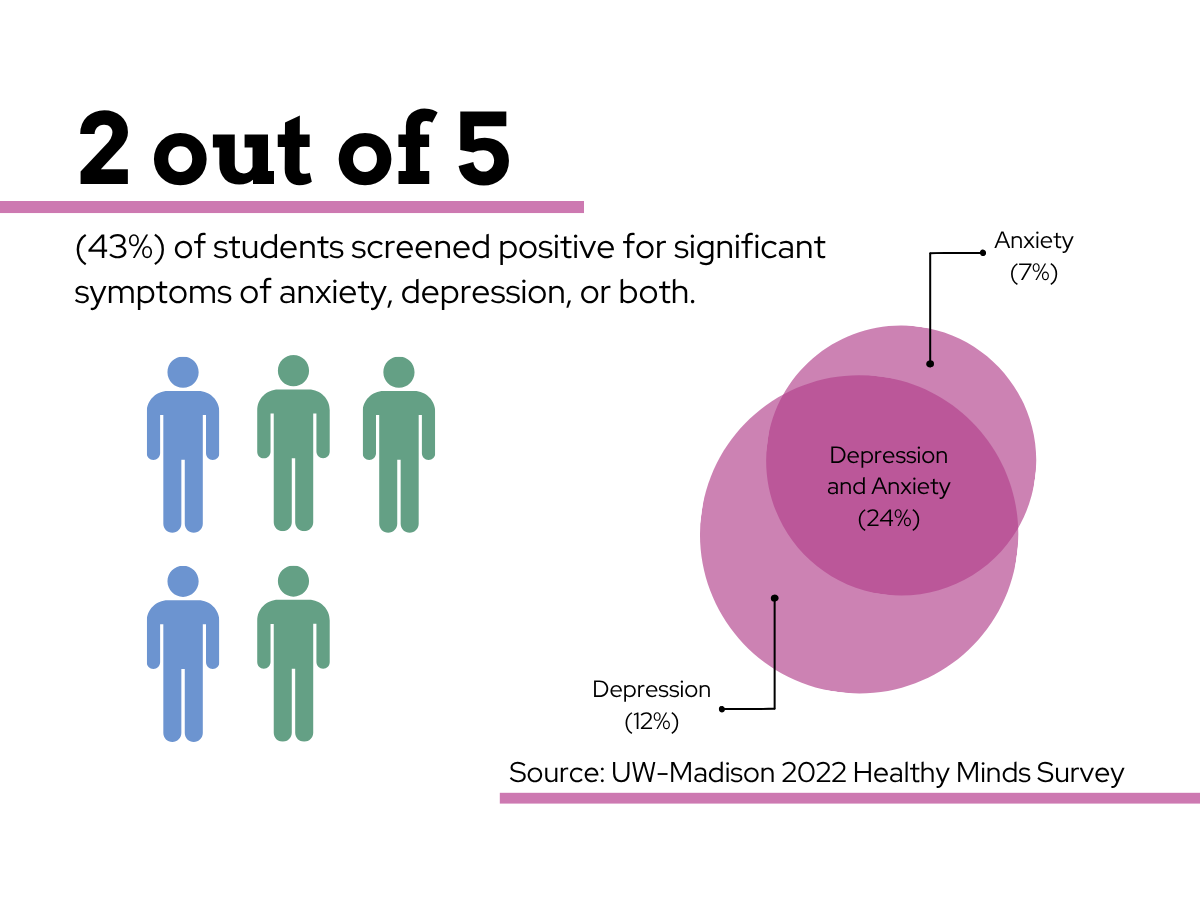
Thrive Online is a comprehensive resource hub designed to support college students in navigating the mental health challenges that often arise during their academic journey.
Whether dealing with stress, anxiety, loneliness, or burnout, Thrive Online offers practical tools and evidence-based strategies to help students build resilience, develop healthy coping mechanisms, and thrive personally and academically.
Common concerns amongst college students
College, at its core, is an academic environment, but we don’t show up as just students. We show up as whole people. That means the mental health challenges we face during these years aren’t confined to classes or exams. College is also a pivotal stage of personal growth, identity exploration, and social development, and our mental health weaves through every part of that experience.
Similar to stress, anxiety is the result of internalized triggers and persists to the point of disrupting a person’s ability to function. Symptoms may include but are not limited to:
| Cognitive Symptoms | Physical Symptoms |
|---|---|
| Trouble focusing | Headache |
| Inability to stop worrying | Nausea |
| Intrusive thoughts | Trouble breathing |
| “What if” and black & white thinking | Rapid heart rate |
Anxiety can arise in specific situations such as social settings (social anxiety), exams (test anxiety), and sometimes without a clear cause (generalized anxiety). 34% of college students reported experiencing anxiety, with 28% reporting that it negatively impacted their academics. Common contributors may include family expectations, financial stress, balancing extracurriculars like sports or clubs, and pressure to qualify for competitive programs such as graduate or medical school.
Academic-related anxiety can often resemble the symptoms of ADHD, making it hard to tell them apart. Meeting with a mental health professional can help clarify the nature of these challenges and guide appropriate support.
Depression is more than just sadness. It involves a loss of energy, motivation, emotion, and interest in activities students once enjoyed, sometimes even leading to a loss of appetite.
25% of college students report experiencing depression, with 19% reporting that it negatively impacted their academics. Depression is often misunderstood as something that only shows up in extreme or disruptive ways. In reality, many students function through their depression, managing to meet their responsibilities while feeling persistently numb or empty inside. Because of this, depression should not be measured only by how much it disrupts daily tasks, but also by how much it limits a student’s ability to fully engage with life.
| Cognitive Symptoms | Physical Symptoms |
|---|---|
| Difficulty concentrating or making decisions | Changes in sleep (insomnia or hypersomnia) |
| Persistent negative thoughts | Changes in appetite (loss or gain) |
| Impaired memory of slow thinking | Loss of energy |
| Thought of self-harm |
Depression can develop gradually and go unnoticed while students are focused on staying productive or meeting goals. Many students become so focused on school that they forget to take breaks or do things they enjoy. This can lead to a cycle of exhaustion that eventually forces them to take even more time off to recover. Maintaining regular rest and doing activities they enjoy isn’t optional. It’s a key part of staying healthy and doing their best over time.
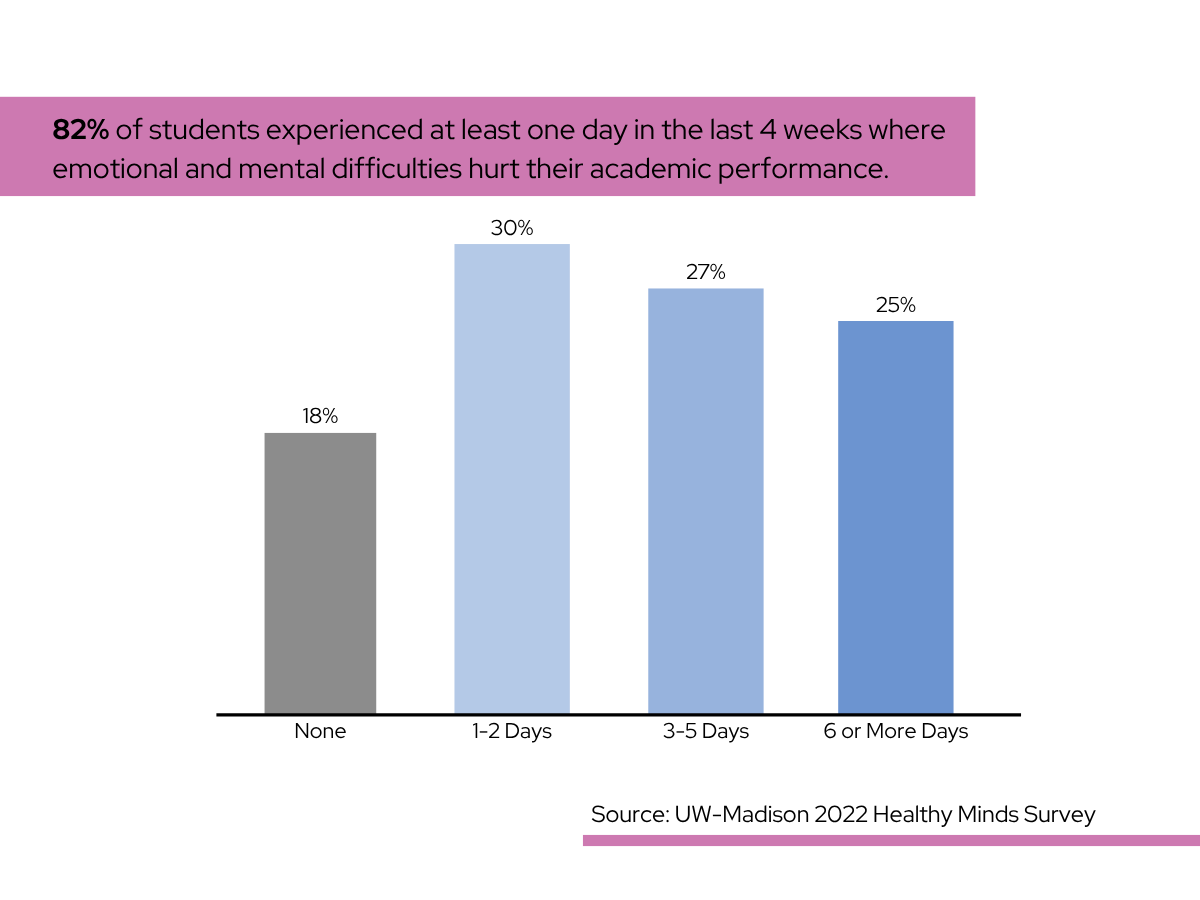
Mental health and academic performance
College is a big life change and, for many students, the first time they’re living on their own. Along with that comes the challenge of balancing personal, academic, social, financial, health, and career responsibilities. It’s not uncommon to feel stressed or to notice that you’re not performing at your full academic potential.
Thrive Online empowers students with practical tools to manage their time efficiently, build healthy coping strategies, and reduce stress, enhancing both their wellbeing and academic success. Understanding mental health, both in general and in your own life, is an important skill and is crucial for taking care of yourself and performing at your best.
Interested in other topics?